









We are here to support at every stage of your diagnosis, along with your family, friends, carers and healthcare professionals.
What are the first signs of MSA?
For men, the first symptom is often erectile dysfunction (the inability to achieve or sustain an erection). The problem is often incorrectly attributed to ageing or stress related issues, without exploring other possibilities.
Bladder issues may also be evident. These can be:
- urgency (needing to rush to the toilet)
- frequency (needing to go often)
- nocturia (night time passing of urine)
- retention (not being able to pass urine or empty the bladder completely).
All of these can change over time.
Other problems can include feeling stiff and slow movement as well as changes in handwriting. Some people lose their balance and become unsteady. If blood pressure control has been affected, then people may feel dizzy when standing up or experience episodes of fainting.
Many people are diagnosed with Parkinson’s Disease initially. This doesn’t mean your Neurologist has got the diagnosis wrong. MSA can look like Parkinson’s Disease in the early stages. Often it isn’t until later when other symptoms develop, or the progression of symptoms is faster than expected, that the diagnosis is revisited.
There are three groups of symptoms which reflect the three main areas of the brain that may be affected:
- the basal ganglia causing problems with movement (parkinsonism)
- the cerebellum causing poor balance and co-ordination (cerebellar ataxia)
- the brain stem causing autonomic problems such as poor bladder and blood pressure control
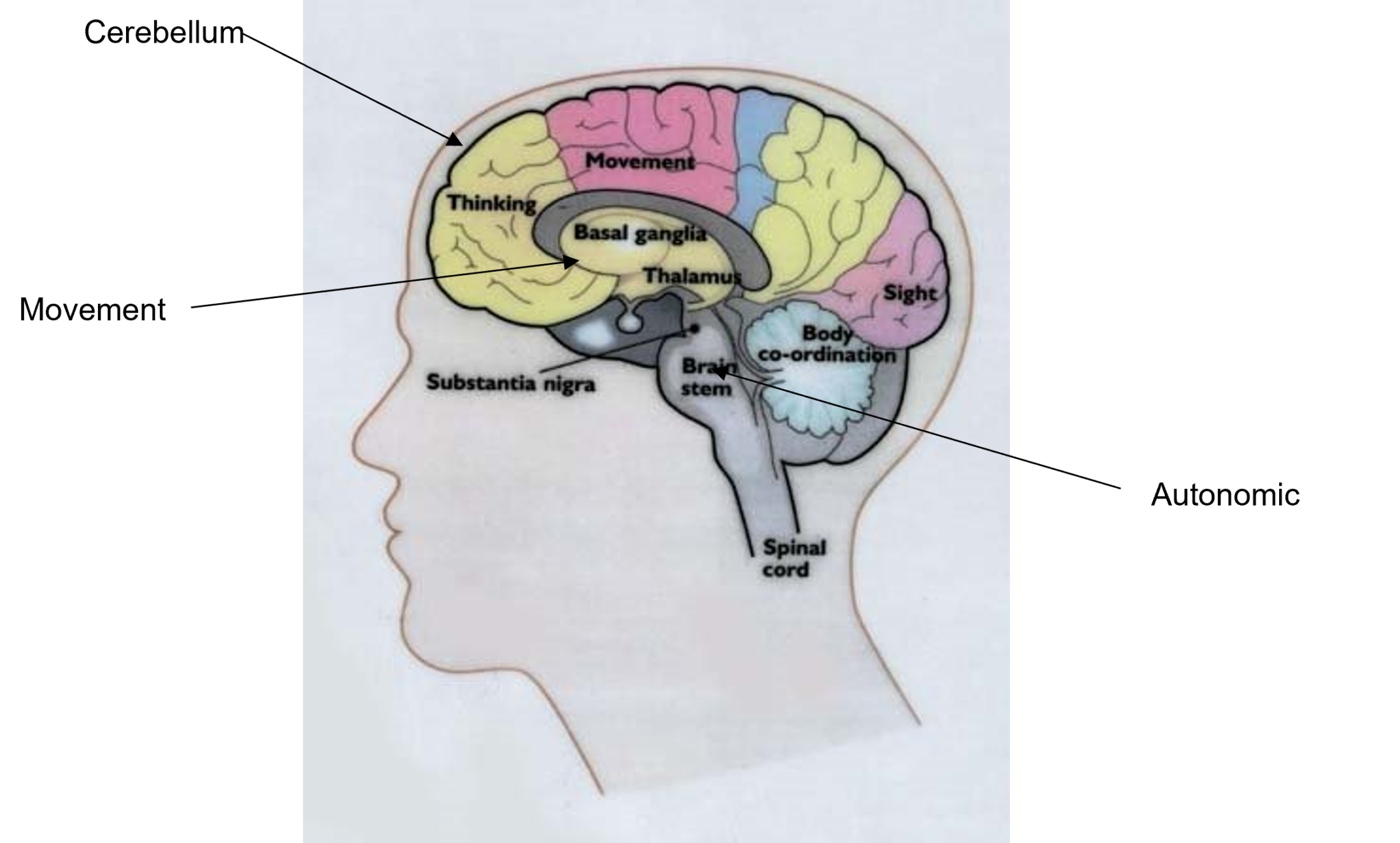
Basal ganglia causing problems with movement (parkinsonism) The cerebellum causing poor balance and co-ordination Brain stem causing autonomic problems such as poor bladder and blood pressure control Other problems Feeling slow and stiff when moving
Difficulty in starting to move
Difficulty turning in bedFeeling unsteady and dropping things
Finding it difficult to fasten buttons or zips
Feeling less confident in crowded areas
Unable to balance without support
Difficulty writing
Slurred speechBladder problems
Feeling dizzy or fainting (due to a drop in blood pressure)
Pain around neck and shoulders (known as ‘coat hanger pain’)
Constipation
For men, difficulty with erection
Cold hands and feet
Problems with temperature control
Excessive or reduced sweatingWeakness of arms and legs
A change of emotional responses, laughing or crying more readily
Restless sleep
Vivid dreams or nightmares
Noisy breathing during the day and loud inspiratory noises, known as ‘stridor’, commonly at night
Unintentional sighing
Weak, quiet voice
Swallowing problems, difficulty chewing, choking episodes
Eye muscle weakness which may cause blurred vision
Having a diagnosis of MSA does not mean you will experience all of these symptoms.
There is currently no specific treatment to prevent MSA from progressing (although clinical trials and research are being undertaken) but there are ways of managing some of the symptoms. These include lifestyle adaptations, medications for specific symptoms and ensuring you get the support and advice from the professionals involved in your care.
Remember the MSA Trust is here to help.
What happens next?
MMSA is degenerative, which means that unfortunately symptoms will worsen over time. As things progress, you will require help from others to carry out your activities of daily living. The speed of these changes is difficult to predict. People with MSA experience the condition differently and the speed of progression varies from person to person.
Some people feel they cope better if they know what lies ahead. Whilst MSA progression is very individual and unpredictable, you can discuss what might happen in the future with your Specialist, Parkinsons Nurse Specialist or our MSA Health Care Specialists.